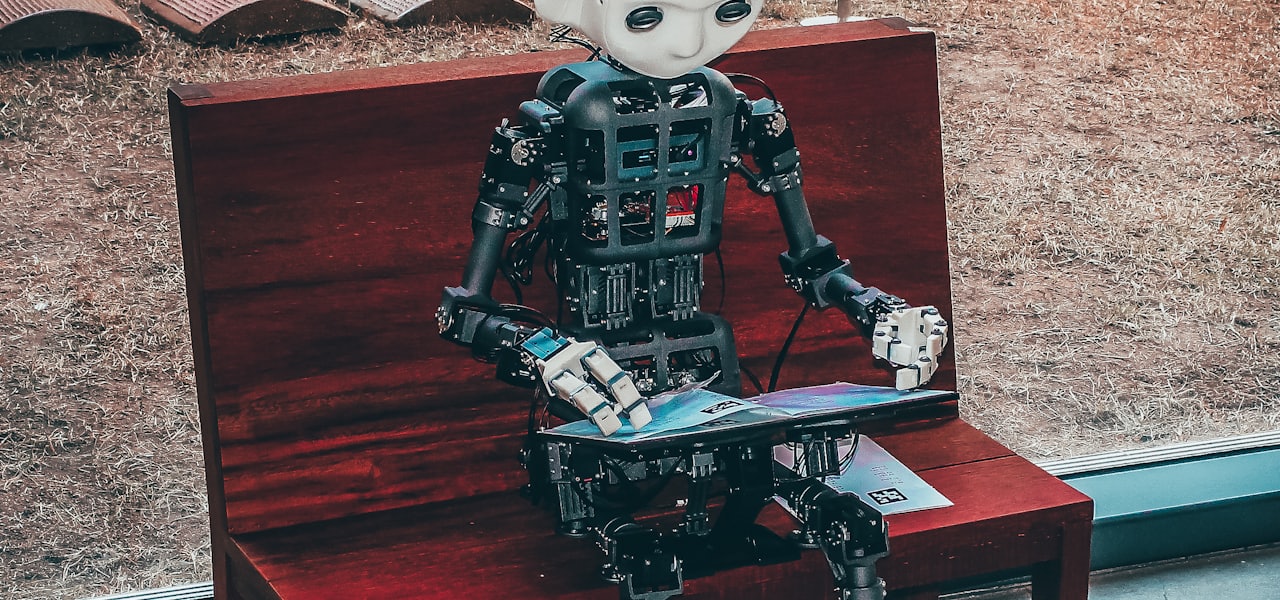
An AI browser is a web browser with integrated artificial intelligence capabilities, such as automatically summarizing web page content or answering questions about it. A more specialized type is an agentic browser, based on the concept of agentic AI, which can take actions – such as navigating webpages or filling out forms – on behalf of the user. Several agentic browsers emerged in 2025, including ChatGPT Atlas (macOS only), Comet, and Dia. As of 2025, this is a recent development in the browser market, including new entrants from OpenAI, Opera and Perplexity. The designation of 'AI browser' also includes established browsers that later added non-agentic AI features, such as Microsoft Edge with the Copilot chatbot, Google Chrome with the Gemini chatbot (for Windows desktop users in the US with their language set to English), and Firefox with multiple chatbot providers (such as ChatGPT, Claude, Copilot, Gemini, and Le Chat). AI browsers have been noted to be susceptible to prompt injection attacks. == Browser extensions and integrations == Rather than creating entirely new browsers, some AI browsing solutions integrate with existing browsers through extensions or companion applications. These tools add agentic capabilities to established browsers without requiring users to switch platforms. Examples include Composite, which functions as a cross-browser agent that works with Chrome, Edge, and other browsers to automate web-based tasks for workers. == Cloud-based implementations == Cloud-based implementations of AI browsers allow users to run automated browsing agents without local installation. These systems operate on remote servers using frameworks such as Puppeteer or Playwright. Examples include Browserbase, Browser-use and AI Browser. The AI typically parses the Document Object Model (DOM) to locate and interact with page elements, and may also analyze browser screenshots to interpret layout and structure. == Criticisms and dangers == AI browsers have been noted to be susceptible to being vulnerable to prompt injection attacks, in which the content of websites can be used to hijack the control of the browser. Multiple organisations have argued against using AI browsers due to this vulnerability. The United Kingdom national cyber security centre and Gartner consider them to be too risky for adoption by most organisations. A study by the CISPA Helmholtz Center and Saarland University concluded that this vulnerability makes them easy targets for malware, fraud, automated defamation, disinformation and biased outputs.
Directional cubic convolution interpolation
Directional cubic convolution interpolation (DCCI) is an edge-directed image scaling algorithm created by Dengwen Zhou and Xiaoliu Shen. By taking into account the edges in an image, this scaling algorithm reduces artifacts common to other image scaling algorithms. For example, staircase artifacts on diagonal lines and curves are eliminated. The algorithm resizes an image to 2x its original dimensions, minus 1.
United States Tech Force
The U.S. Tech Force (also styled as US Tech Force, Tech Force, or Government Tech Force) is a federal hiring initiative launched by the second Donald Trump administration in December 2025. The program, administered by the Office of Personnel Management (OPM), aims to recruit about 1,000 early-career technology professionals into two-year government jobs to modernize federal IT systems, advance artificial intelligence (AI) capabilities, and address technological gaps in government operations. The initiative is an effort to plug capability gaps created by Trump-administration efforts to shrink the federal government, which led to the departure of some 220,000 federal employees, including many in IT. The initiative seeks early-career workers; officials said it would offer competitive salaries and opportunities to work on high-impact government technology projects. Major technology companies—including Amazon, Apple, Microsoft, Nvidia, Meta, Google, and OpenAI—agreed to help identify and refer candidates. Candidates are allowed to take Tech Force positions on leaves of absence and without divesting their stock, raising conflict-of-interest questions. In January 2026, OPM direction Scott Kupor said the deadline for applying to Tech Force was being extended because of "tremendous interest" without saying how many people had actually applied. Also in December 2025, news broke that the administration is planning another novel use of private-sector workers: hiring cybersecurity firms for offensive cyber operations.
Toy problem
In scientific disciplines, a toy problem or a puzzlelike problem is a problem that is not of immediate scientific interest, yet is used as an expository device to illustrate a trait that may be shared by other, more complicated, instances of the problem, or as a way to explain a particular, more general, problem solving technique. A toy problem is useful to test and demonstrate methodologies. Researchers can use toy problems to compare the performance of different algorithms. They are also good for game designing. For instance, while engineering a large system, the large problem is often broken down into many smaller toy problems which have been well understood in detail. Often these problems distill a few important aspects of complicated problems so that they can be studied in isolation. Toy problems are thus often very useful in providing intuition about specific phenomena in more complicated problems. As an example, in the field of artificial intelligence, classical puzzles, games and problems are often used as toy problems. These include sliding-block puzzles, N-Queens problem, missionaries and cannibals problem, tic-tac-toe, chess, Tower of Hanoi and others.
Artificial consciousness
Artificial consciousness, also known as machine consciousness, synthetic consciousness, or digital consciousness, is consciousness hypothesized to be possible for artificial intelligence. It is also the corresponding field of study, which draws insights from philosophy of mind, philosophy of artificial intelligence, cognitive science and neuroscience. The term "sentience" can be used when specifically designating ethical considerations stemming from a form of phenomenal consciousness (P-consciousness, or the ability to feel qualia). Since sentience involves the ability to experience ethically positive or negative (i.e., valenced) mental states, it may justify welfare concerns and legal protection, as with non-human animals. Some scholars believe that consciousness is generated by the interoperation of various parts of the brain; these mechanisms are labeled the neural correlates of consciousness (NCC). Some further believe that constructing a system (e.g., a computer system) that can emulate this NCC interoperation would result in a system that is conscious. Some scholars reject the possibility of non-biological conscious beings. == Philosophical views == As there are many hypothesized types of consciousness, there are many potential implementations of artificial consciousness. In the philosophical literature, perhaps the most common taxonomy of consciousness is into "access" and "phenomenal" variants. Access consciousness concerns those aspects of experience that can be apprehended, while phenomenal consciousness concerns those aspects of experience that seemingly cannot be apprehended, instead being characterized qualitatively in terms of "raw feels", "what it is like" or qualia. === Plausibility debate === Type-identity theorists and other skeptics hold the view that consciousness can be realized only in particular physical systems because consciousness has properties that necessarily depend on physical constitution. In his 2001 article "Artificial Consciousness: Utopia or Real Possibility," Giorgio Buttazzo says that a common objection to artificial consciousness is that, "Working in a fully automated mode, they [the computers] cannot exhibit creativity, unreprogrammation (which means can 'no longer be reprogrammed', from rethinking), emotions, or free will. A computer, like a washing machine, is a slave operated by its components." For other theorists (e.g., functionalists), who define mental states in terms of causal roles, any system that can instantiate the same pattern of causal roles, regardless of physical constitution, will instantiate the same mental states, including consciousness. ==== Thought experiments ==== David Chalmers proposed two thought experiments intending to demonstrate that "functionally isomorphic" systems (those with the same "fine-grained functional organization", i.e., the same information processing) will have qualitatively identical conscious experiences, regardless of whether they are based on biological neurons or digital hardware. The "fading qualia" is a reductio ad absurdum thought experiment. It involves replacing, one by one, the neurons of a brain with a functionally identical component, for example based on a silicon chip. Chalmers makes the hypothesis, knowing it in advance to be absurd, that "the qualia fade or disappear" when neurons are replaced one-by-one with identical silicon equivalents. Since the original neurons and their silicon counterparts are functionally identical, the brain's information processing should remain unchanged, and the subject's behaviour and introspective reports would stay exactly the same. Chalmers argues that this leads to an absurd conclusion: the subject would continue to report normal conscious experiences even as their actual qualia fade away. He concludes that the subject's qualia actually don't fade, and that the resulting robotic brain, once every neuron is replaced, would remain just as sentient as the original biological brain. Similarly, the "dancing qualia" thought experiment is another reductio ad absurdum argument. It supposes that two functionally isomorphic systems could have different perceptions (for instance, seeing the same object in different colors, like red and blue). It involves a switch that alternates between a chunk of brain that causes the perception of red, and a functionally isomorphic silicon chip, that causes the perception of blue. Since both perform the same function within the brain, the subject would not notice any change during the switch. Chalmers argues that this would be highly implausible if the qualia were truly switching between red and blue, hence the contradiction. Therefore, he concludes that the equivalent digital system would not only experience qualia, but it would perceive the same qualia as the biological system (e.g., seeing the same color). Greg Egan's short story Learning To Be Me (mentioned in §In fiction), illustrates how undetectable duplication of the brain and its functionality could be from a first-person perspective. Critics object that Chalmers' proposal begs the question in assuming that all mental properties and external connections are already sufficiently captured by abstract causal organization. Van Heuveln et al. argue that the dancing qualia argument contains an equivocation fallacy, conflating a "change in experience" between two systems with an "experience of change" within a single system. Mogensen argues that the fading qualia argument can be resisted by appealing to vagueness at the boundaries of consciousness and the holistic structure of conscious neural activity, which suggests consciousness may require specific biological substrates rather than being substrate-independent. Anil Seth argues that the complexity of brain neurons intrinsically matters in addition to their function and that it is not possible to replace any part of the brain with a perfect silicon equivalent. He points out that some of biological neurons exhibit activity aimed at cleaning up metabolic waste products, and writes that a perfect silicon replacement would require a silicon-based metabolism, but silicon is not suitable for creating such artificial metabolism. ==== In large language models ==== In 2022, Google engineer Blake Lemoine made a viral claim that Google's LaMDA chatbot was sentient. Lemoine supplied as evidence the chatbot's humanlike answers to many of his questions; however, the chatbot's behavior was judged by the scientific community as likely a consequence of mimicry, rather than machine sentience. Lemoine's claim was widely derided for being ridiculous. Moreover, attributing consciousness based solely on the basis of LLM outputs or the immersive experience created by an algorithm is considered a fallacy. However, while philosopher Nick Bostrom states that LaMDA is unlikely to be conscious, he additionally poses the question of "what grounds would a person have for being sure about it?" One would have to have access to unpublished information about LaMDA's architecture, and also would have to understand how consciousness works, and then figure out how to map the philosophy onto the machine: "(In the absence of these steps), it seems like one should be maybe a little bit uncertain. [...] there could well be other systems now, or in the relatively near future, that would start to satisfy the criteria." David Chalmers argued in 2023 that LLMs today display impressive conversational and general intelligence abilities, but are likely not conscious yet, as they lack some features that may be necessary, such as recurrent processing, a global workspace, and unified agency. Nonetheless, he considers that non-biological systems can be conscious, and suggested that future, extended models (LLM+s) incorporating these elements might eventually meet the criteria for consciousness, raising both profound scientific questions and significant ethical challenges. However, the view that consciousness can exist without biological phenomena is controversial and some reject it. Kristina Šekrst cautions that anthropomorphic terms such as "hallucination" can obscure important ontological differences between artificial and human cognition. While LLMs may produce human-like outputs, she argues that it does not justify ascribing mental states or consciousness to them. Instead, she advocates for an epistemological framework (such as reliabilism) that recognizes the distinct nature of AI knowledge production. She suggests that apparent understanding in LLMs may be a sophisticated form of AI hallucination. She also questions what would happen if an LLM were trained without any mention of consciousness. === Testing === Sentience is an inherently first-person phenomenon. Because of that, and due to the lack of an empirical definition of sentience, directly measuring it may be impossible. Although systems may display numerous behaviors correlated with sentience, determining whether a system is sentient is known as the hard pr
TargetLink
TargetLink is a software for automatic code generation, based on a subset of Simulink/Stateflow models, produced by dSPACE GmbH. TargetLink requires an existing MATLAB/Simulink model to work on. TargetLink generates both ANSI-C and production code optimized for specific processors. It also supports the generation of AUTOSAR-compliant code for software components for the automotive sector. The management of all relevant information for code generation takes place in a central data container, called the Data Dictionary. Testing of the generated code is implemented in Simulink, which is also used for the specification of the underlying simulation models. TargetLink supports three simulation modes to test the generated code: Model-in-the-loop simulation (MIL): this mode allows the model design to be checked. An MIL simulation is also known as a floating-point simulation, since the variables are typically floating-point variables. Software-in-the-loop (SIL): the simulation is based on the execution of generated code, which runs on a PC system. The variables are typically plain or fixed point numbers. Processor-in-the-loop (PIL): in a PIL simulation, the generated code runs on the target hardware or on an evaluation board. So-called real-time frames are included, making it possible to transfer the simulation results as well as memory consumption and runtime information to the PC. The Motor Industry Software Reliability Association (MISRA) published official MISRA modeling guidelines for TargetLink in late 2007, which are particularly important for functional safety of safety-critical applications. In 2009, TÜV SÜD certified TargetLink for use during the development of safety-critical systems to ISO DIS 26262 and IEC 61508.
Feature engineering
Feature engineering is a preprocessing step in supervised machine learning and statistical modeling which transforms raw data into a more effective set of inputs. Each input comprises several attributes, known as features. By providing models with relevant information, feature engineering significantly enhances their predictive accuracy and decision-making capability. Beyond machine learning, the principles of feature engineering are applied in various scientific fields, including physics. For example, physicists construct dimensionless numbers such as the Reynolds number in fluid dynamics, the Nusselt number in heat transfer, and the Archimedes number in sedimentation. They also develop first approximations of solutions, such as analytical solutions for the strength of materials in mechanics. == Clustering == One of the applications of feature engineering has been clustering of feature-objects or sample-objects in a dataset. Especially, feature engineering based on matrix decomposition has been extensively used for data clustering under non-negativity constraints on the feature coefficients. These include Non-Negative Matrix Factorization (NMF), Non-Negative Matrix-Tri Factorization (NMTF), Non-Negative Tensor Decomposition/Factorization (NTF/NTD), etc. The non-negativity constraints on coefficients of the feature vectors mined by the above-stated algorithms yields a part-based representation, and different factor matrices exhibit natural clustering properties. Several extensions of the above-stated feature engineering methods have been reported in literature, including orthogonality-constrained factorization for hard clustering, and manifold learning to overcome inherent issues with these algorithms. Other classes of feature engineering algorithms include leveraging a common hidden structure across multiple inter-related datasets to obtain a consensus (common) clustering scheme. An example is Multi-view Classification based on Consensus Matrix Decomposition (MCMD), which mines a common clustering scheme across multiple datasets. MCMD is designed to output two types of class labels (scale-variant and scale-invariant clustering), and: is computationally robust to missing information, can obtain shape- and scale-based outliers, and can handle high-dimensional data effectively. Coupled matrix and tensor decompositions are popular in multi-view feature engineering. == Predictive modelling == Feature engineering in machine learning and statistical modeling involves selecting, creating, transforming, and extracting data features. Key components include feature creation from existing data, transforming and imputing missing or invalid features, reducing data dimensionality through methods like Principal Components Analysis (PCA), Independent Component Analysis (ICA), and Linear Discriminant Analysis (LDA), and selecting the most relevant features for model training based on importance scores and correlation matrices. Features vary in significance. Even relatively insignificant features may contribute to a model. Feature selection can reduce the number of features to prevent a model from becoming too specific to the training data set (overfitting). Feature explosion occurs when the number of identified features is too large for effective model estimation or optimization. Common causes include: Feature templates - implementing feature templates instead of coding new features Feature combinations - combinations that cannot be represented by a linear system Feature explosion can be limited via techniques such as regularization, kernel methods, and feature selection. == Automation == Automation of feature engineering is a research topic that dates back to the 1990s. Machine learning software that incorporates automated feature engineering has been commercially available since 2016. Related academic literature can be roughly separated into two types: Multi-relational Decision Tree Learning (MRDTL) uses a supervised algorithm that is similar to a decision tree. Deep Feature Synthesis uses simpler methods. === Multi-relational Decision Tree Learning (MRDTL) === Multi-relational Decision Tree Learning (MRDTL) extends traditional decision tree methods to relational databases, handling complex data relationships across tables. It innovatively uses selection graphs as decision nodes, refined systematically until a specific termination criterion is reached. Most MRDTL studies base implementations on relational databases, which results in many redundant operations. These redundancies can be reduced by using techniques such as tuple id propagation. === Open-source implementations === There are a number of open-source libraries and tools that automate feature engineering on relational data and time series: featuretools is a Python library for transforming time series and relational data into feature matrices for machine learning. MCMD: An open-source feature engineering algorithm for joint clustering of multiple datasets. OneBM or One-Button Machine combines feature transformations and feature selection on relational data with feature selection techniques. OneBM helps data scientists reduce data exploration time allowing them to try and error many ideas in short time. On the other hand, it enables non-experts, who are not familiar with data science, to quickly extract value from their data with a little effort, time, and cost. getML community is an open source tool for automated feature engineering on time series and relational data. It is implemented in C/C++ with a Python interface. It has been shown to be at least 60 times faster than tsflex, tsfresh, tsfel, featuretools or kats. tsfresh is a Python library for feature extraction on time series data. It evaluates the quality of the features using hypothesis testing. tsflex is an open source Python library for extracting features from time series data. Despite being 100% written in Python, it has been shown to be faster and more memory efficient than tsfresh, seglearn or tsfel. seglearn is an extension for multivariate, sequential time series data to the scikit-learn Python library. tsfel is a Python package for feature extraction on time series data. kats is a Python toolkit for analyzing time series data. === Deep feature synthesis === The deep feature synthesis (DFS) algorithm beat 615 of 906 human teams in a competition. == Feature stores == The feature store is where the features are stored and organized for the explicit purpose of being used to either train models (by data scientists) or make predictions (by applications that have a trained model). It is a central location where you can either create or update groups of features created from multiple different data sources, or create and update new datasets from those feature groups for training models or for use in applications that do not want to compute the features but just retrieve them when it needs them to make predictions. A feature store includes the ability to store code used to generate features, apply the code to raw data, and serve those features to models upon request. Useful capabilities include feature versioning and policies governing the circumstances under which features can be used. Feature stores can be standalone software tools or built into machine learning platforms. == Alternatives == Feature engineering can be a time-consuming and error-prone process, as it requires domain expertise and often involves trial and error. Deep learning algorithms may be used to process a large raw dataset without having to resort to feature engineering. However, deep learning algorithms still require careful preprocessing and cleaning of the input data. In addition, choosing the right architecture, hyperparameters, and optimization algorithm for a deep neural network can be a challenging and iterative process.